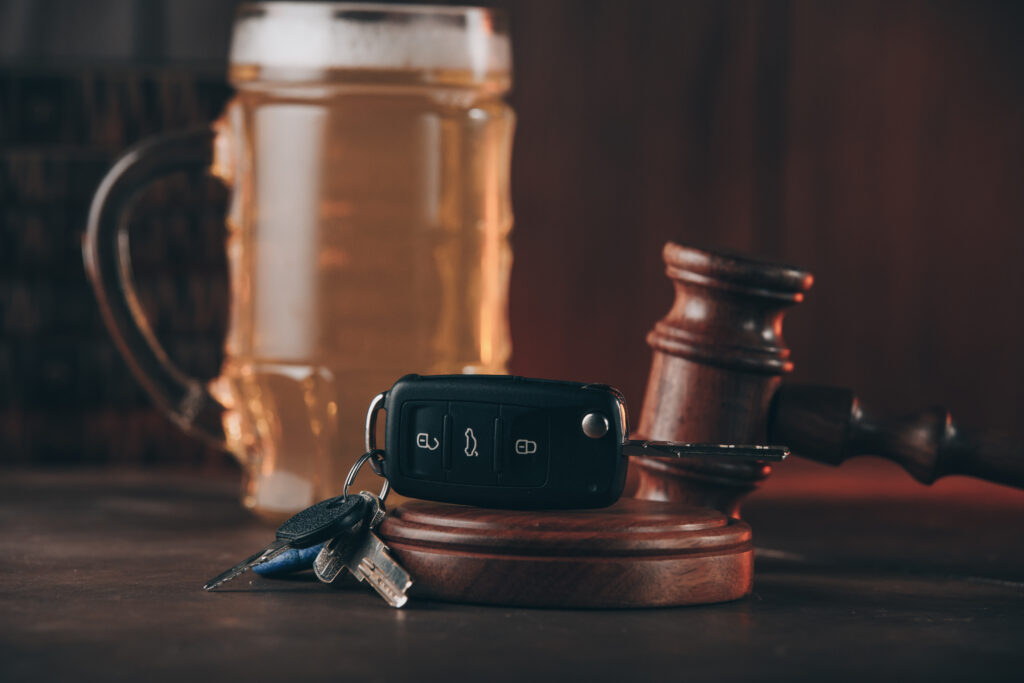
In Wisconsin, what many people call “DUI” is legally known as Operating While Intoxicated (OWI), and it is one of the most frequently charged offenses in the state. Even a first offense can lead to steep fines, license revocation, and long-term consequences, and repeat OWI offenses or cases involving injury can become felonies.
If you have been arrested for OWI anywhere in Wisconsin, you should speak with a skilled Wisconsin OWI defense attorney as soon as possible. The Law Offices of Christopher J. Cherella has helped many clients get OWI charges reduced, dismissed, and even prevented charges from being filed at all. Call (414) 347-9334 or contact us online to schedule a free consultation with an experienced Wisconsin OWI lawyer.
When Does an OWI Become a Felony in Wisconsin?
Most first and many second or third OWI offenses are handled as misdemeanors or civil forfeitures, but certain situations automatically elevate the case to a felony under Wisconsin Statutes section 346.65. Understanding this distinction is critical when you are evaluating your risks and potential penalties.
Fourth or Subsequent OWI Offense
A fourth OWI offense in Wisconsin is always a Class H felony, regardless of how long ago your prior OWI-related convictions occurred. A fourth OWI conviction can bring 60 days to 6 years of imprisonment, fines up to $10,000, and long-term driver’s license consequences.
OWI Causing Injury or Great Bodily Harm
If you operate while intoxicated and cause bodily harm to another person, you can be charged with a criminal offense even on your first OWI. When the injuries are serious (great bodily harm), the charge can be enhanced to a Class F felony, punishable by up to 12.5 years in prison and a fine up to $25,000.
OWI Causing Death
An OWI involving a fatal crash is treated as a very serious felony offense in Wisconsin. Depending on your prior record and case facts, you may face Class D or Class C felony penalties, which can mean up to 25–40 years of imprisonment and fines as high as $100,000.
OWI with a Minor Passenger
Wisconsin law imposes enhanced penalties if you commit OWI with a passenger under 16 years old in the vehicle. For second and subsequent OWI offenses, the statute doubles the applicable minimum and maximum fines and jail terms, and a third-offense OWI with a minor passenger is treated as a felony.
OWI Penalties in Wisconsin
Felony OWI convictions can expose you to prison, extended supervision, and lifelong collateral consequences. These cases are aggressively prosecuted and require an equally aggressive defense.
Common felony OWI consequences can include:
- Fourth OWI (Class H felony): 60 days to 6 years in prison, up to $10,000 in fines, long revocation periods, and mandatory IID.
- OWI causing great bodily harm (Class F felony): Up to 12.5 years of imprisonment and fines up to $25,000.
- OWI homicide (Class D or C felony): Up to 25–40 years in prison and up to $100,000 in fines, depending on prior OWI history.
- Lengthy or lifetime license revocation, extended supervision, and strict abstinence and monitoring conditions.
Because the stakes are so high in felony OWI cases, it is essential to challenge every aspect of the traffic stop, testing, and evidence.
Refusal Penalties in Wisconsin OWI Cases
Under Wisconsin's implied consent law (Wis. Stat. § 343.305), refusing a chemical test after an OWI arrest triggers automatic administrative penalties separate from any criminal OWI charge. These hit hard and fast, even without a conviction. Penalties may vary but typically include:
- First refusal: 1-year license revocation, mandatory ignition interlock device (IID) for 1 year, alcohol assessment; occupational license eligibility after 30 days (vs. immediate for test-takers).
- Second refusal: 2-year revocation, IID requirement, harsher conditions; occupational license after 90 days.
- Third or more: 3-year revocation, IID/24/7 sobriety program, occupational license after 120 days or ineligible for 1 year if multiple priors.
Officers issue a Notice of Intent to Revoke immediately. This only gives you 10 days to request a refusal hearing challenging probable cause, officer procedure, or actual refusal. Miss it, and revocation starts at 30 days. Working with our OWI attorneys gives you access to a team that handles both the criminal and administrative challenges you may be facing after an arrest. Reach out now at (414) 347-9334 to discuss your charges.
Common OWI Defenses We Use
At the Law Offices of Christopher J. Cherella, we take an aggressive approach to uncover weaknesses in every OWI case. Our attorneys regularly use proven strategies to challenge the prosecution’s evidence and protect our clients’ rights.
We often begin by questioning the legality of the traffic stop, exposing situations where officers lacked probable cause. We also investigate breathalyzer results by reviewing calibration and maintenance records, an approach that has frequently led to reduced charges for our clients.
For field sobriety tests, we highlight factors such as medical conditions or unclear police instructions that can invalidate the results. In some cases, we use the “rising BAC” defense to show that blood alcohol levels increased after the traffic stop, not before, leading to acquittals in court.
Our criminal defense lawyers also represent clients in refusal hearings, successfully challenging administrative license suspensions and helping them restore their driving privileges.
These strategies have helped hundreds of clients avoid jail time and protect their records from OWI convictions and felony charges.
Speak with a DUI Lawyer in Wisconsin to Learn More
An OWI arrest in Wisconsin can affect your job, your driver’s license, and your future, and the risks increase dramatically when you are facing a felony OWI. Having an experienced Wisconsin OWI defense lawyer on your side can make a critical difference in the outcome of your case.
At the Law Offices of Christopher J. Cherella, we fight to protect our clients’ rights, driving privileges, and freedom in OWI cases throughout Wisconsin. Our team works to get charges reduced or dismissed whenever possible and to minimize the impact of an OWI on your record and your life. Call (414) 347-9334 or contact us online today to schedule a free consultation with a Wisconsin OWI attorney.