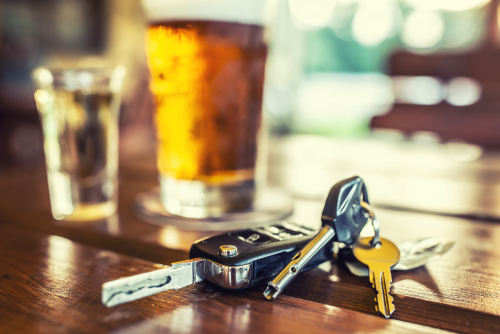
In Wisconsin, drunk or drugged driving is called operating while intoxicated, or OWI. A first OWI is usually a civil forfeiture rather than a crime, but penalties increase quickly with each offense. A second OWI generally becomes a criminal misdemeanor when a prior offense occurred within 10 years. A third offense is a criminal misdemeanor, and a fourth is a felony. Certain circumstances, such as a crash causing serious injury, can make an OWI a felony even without multiple priors.
At the Law Offices of Christopher J. Cherella, we help drivers in Milwaukee and across Wisconsin understand what they’re facing after an OWI arrest. Attorney Christopher J. Cherella is a former prosecutor who knows how these cases are built and where they can be challenged. Contact the Law Offices of Christopher J. Cherella at (414) 347-9334 for a free consultation.
How Wisconsin Defines Operating While Intoxicated
Wisconsin uses the term OWI rather than DUI or DWI. A related charge, prohibited alcohol concentration (PAC), is based on an alcohol test result rather than proof of impairment.
Under Wisconsin law, you can be charged with OWI in three main ways:
- Impairment: Driving while under the influence of an intoxicant to a degree that impairs your ability to drive safely.
- Prohibited alcohol concentration: Driving with an alcohol concentration at or above the legal limit.
- Restricted controlled substances: Operating with a restricted controlled substance in your blood. Wisconsin excludes delta-9 THC concentrations below 1 nanogram per milliliter of blood from this definition, but impairment can still support an OWI charge.
The 0.08 limit isn’t the only standard. For first, second, and third offenses, the prohibited alcohol concentration is 0.08. For fourth and later offenses, and for anyone subject to an ignition interlock order, the limit drops to 0.02.
Commercial drivers face a 0.04 limit while operating a commercial vehicle, and drivers under 21 are held to an absolute sobriety standard, meaning any measurable alcohol can lead to a citation. You can also be charged based on impairment even if your test result is below the limit.
Is an OWI a Felony in Wisconsin?
Sometimes. Whether an OWI is a civil, misdemeanor, or felony offense depends mainly on your prior record and what happened during the incident.
When a First OWI Is a Civil Violation or a Criminal Offense
In most cases, a first OWI in Wisconsin is a noncriminal civil offense punishable by a forfeiture and license revocation. It becomes a criminal offense if a passenger under 16 was in the vehicle or if the incident caused injury to another person.
A second OWI may carry first offense penalties if the prior offense occurred more than 10 years earlier and you have no qualifying lifetime convictions for causing great bodily harm or homicide while intoxicated.
How Prior Offenses Affect Your OWI Charge
Wisconsin counts prior OWI-related convictions, refusals, and certain out-of-state offenses when determining the level of your charge. Time between offenses is measured from violation date to violation date.
Wisconsin OWI Penalties From a First Through Fourth Offense
The table below summarizes standard penalties based on the Wisconsin Department of Transportation’s OWI penalty chart, before any increases for a child passenger, injury, or high blood alcohol level. All OWI convictions also carry a $435 OWI surcharge, plus court costs and fees.
| Offense | Classification | Fine or Forfeiture | Jail or Prison Sentence | License Revocation |
| First | Civil forfeiture | $150-300 | None | 6–9 months |
| Second (prior within 10 years) | Misdemeanor | $350-$1,100 | 5 days–6 months | 12–18 months, plus confinement |
| Third | Misdemeanor | $600-$2,000 | 45 days–1 year | 2–3 years, plus confinement |
| Fourth | Class H felony | $600-$10,000 | Standard 60 day minimum; maximum 6 year sentence | 2–3 years, plus confinement, unless permanent revocation applies |
These are standard penalty ranges. Certain sentencing alternatives may reduce mandatory minimum jail time, and the maximum felony sentence does not mean the entire sentence is spent incarcerated.
First Offense OWI Penalties
For a first OWI, an alcohol concentration of 0.15 or higher triggers a one-year ignition interlock requirement. A court-approved 24/7 sobriety program may be available as an alternative.
Second Offense OWI Penalties
A second OWI with a prior offense within 10 years carries mandatory jail time and ignition interlock requirements. Some defendants may qualify for a Safe Streets probation option that reduces the mandatory minimum jail sentence if they meet treatment and other requirements. This option is available only once in a person’s lifetime.
Third Offense OWI Penalties
A third OWI carries a longer mandatory minimum jail sentence and ignition interlock requirements. Starting with a third offense, high alcohol concentrations also increase fines: they double at 0.17 to below 0.20, triple at 0.20 to below 0.25, and quadruple at 0.25 or higher.
Fourth Offense OWI Penalties
A fourth OWI is a Class H felony with a maximum six year sentence. The standard mandatory minimum is 60 days in jail, although a qualifying Safe Streets probation option may reduce that minimum. A conviction also carries ignition interlock requirements and may trigger permanent license revocation.
According to Wisconsin DOT, permanent revocation based on four or more alcohol or drug impairment-related offenses applies when the fourth offense occurs within 15 years of the previous offense. A person whose driving privileges are permanently revoked may be eligible to apply for reinstatement after 10 years.
What Circumstances Can Increase OWI Penalties or Lead to Felony Charges?
An OWI can carry more serious penalties when a child is in the vehicle, someone is injured or killed, or the driver has a high blood alcohol concentration (BAC). Refusing a chemical test can also result in separate license penalties.
Having a Passenger Younger Than 16
Having a passenger younger than 16 makes even a first OWI a criminal offense, punishable by a $350 to $1,100 fine, 5 days to 6 months in jail, and a longer license revocation. For a second offense with a prior offense within 10 years, or a third or subsequent offense, fines, jail time, and revocation periods are generally doubled. A child passenger does not automatically make an OWI a felony, but it substantially increases the potential penalties.
Causing Injury or Death
The severity of the injury and the driver’s prior record can determine whether an OWI-related crash leads to misdemeanor or felony charges:
- Causing injury while intoxicated is generally a misdemeanor for a first offender, punishable by 30 days to 1 year in jail. It can be a Class H felony if the driver has a qualifying prior OWI offense or chemical test refusal.
- Causing great bodily harm is a Class F felony.
- Causing death is a Class D felony, or a Class C felony if the driver has a prior qualifying OWI-related offense.
Refusing a Chemical Test
Refusing a chemical test carries separate consequences, including a one year license revocation for a first refusal and ignition interlock requirements.
If you face an OWI involving any of these circumstances, contact the Law Offices of Christopher J. Cherella at (414) 347-9334 to discuss the charges and your defense options.
What Happens After an OWI Arrest in Wisconsin?
An OWI arrest can lead to both court proceedings and separate action against your driving privileges. Here is what you can generally expect:
- Chemical testing and processing. After an arrest, you’ll typically be asked to submit to a breath or blood test under Wisconsin’s implied consent law. You’ll then be processed and, if released, receive paperwork that may include your citation, license-related notices, and your first court date.
- Separate license proceedings. A prohibited alcohol concentration can lead to a six month administrative suspension, while refusing testing triggers a separate court-based revocation process. These proceedings are distinct from the underlying OWI case.
- Hearing deadlines depend on the notice. For an administrative suspension, a request generally must be postmarked within 10 business days of receiving a notice handed to you, or within 13 business days of the notice date if mailed. For a refusal, the court must receive your written hearing request within 10 days of the notice date. Review your paperwork immediately so you do not miss the applicable deadline.
- Court appearances and case resolution. You will need to address the OWI charge in court while any separate license proceedings move forward.
- Additional requirements after a conviction. A conviction carries license revocation and may require an ignition interlock device. You must also complete an Intoxicated Driver Program assessment and a driver safety plan, which may include education, treatment, or both. Depending on your driving history and eligibility, you may qualify for an occupational license that allows limited driving, such as travel to work or school.
How Can You Fight an OWI Charge in Wisconsin?
Many OWI cases can be challenged, even when the evidence seems strong. Your attorney starts by reviewing the legal basis for the traffic stop and arrest. If police violated your rights, your attorney may seek to suppress the resulting evidence.
Field sobriety tests and chemical test evidence are next. Field sobriety tests are subjective and can be affected by medical conditions, footwear, or road conditions. Breath and blood testing must follow strict procedures, including proper observation before a breath test, accurate equipment, and lawful collection of blood samples.
Finally, your attorney checks prior offenses and the evidence of operation. Errors in counting prior convictions can change the level of your charge, and the state must prove you were actually operating the vehicle. In some cases, these issues can lead to a dismissal or a reduction to a non-OWI offense.
Discuss Your OWI Charge With Law Offices of Christopher J. Cherella
At the Law Offices of Christopher J. Cherella, you work directly with an attorney who brings more than 30 years of legal experience. We take the time to explain your options, address your concerns, and develop a defense based on the circumstances of your case.
Our priority is to protect your driving privileges, pursue alternatives to incarceration when available, and limit the impact of the charges on your future. No attorney can guarantee an outcome, but you do not have to navigate the process alone.
Contact the Law Offices of Christopher J. Cherella at (414) 347-9334 to discuss your OWI charge.